
Founders struggle with three things. They want to present an attractive opportunity without unsupported claims. They have to turn assumptions into evidence. And they need enough detail to be credible without burying the reader.
Stakes are real. CB Insights found that running out of capital was a cause in 70% of analyzed VC-backed shutdowns, and unsustainable unit economics in 19%. This guide walks through defining the investment case, building the core sections, backing it with credible financials, tailoring it to the investor, and preparing for diligence.
Key Takeaways
- Lead with the problem, solution, customer, market, traction, and why you're raising now.
- Tie every major projection to an operating assumption you can test.
- State the ask, use of funds, milestones, and risks plainly.
- Keep the plan, deck, model, and data room consistent.
Start With the Investor Lens Before You Draft
Define the purpose and audience
Different investors weigh risk, scale, and fit differently. The SEC describes angel investors as high-net-worth individuals investing their own money, often at seed or Series A, sometimes serving as advisers or board members.
VC funds invest from Series A through growth stages and seek liquidity through an acquisition or IPO. Private equity firms often take control of an operating company and work to raise its value. Corporate venture investors may want strategic value, such as a customer relationship or product integration, alongside returns.
Before drafting, settle four things:
- Who the investor is and what they typically back
- How much capital you need and the structure, if known
- When you need it
- Which milestones the money should reach
Choose the right format
An investor plan is not the same as other documents:
- Internal operating plan: a roadmap for running the business
- Lender package: built around loan-program requirements such as historical statements and projection support
- Pitch deck: a short presentation that creates interest
- Investor plan: the detailed investment case with funding needs
Plan-type labels vary by source. The SBA recognizes traditional and lean formats. Vendor lists of seven or more types are not a standard. Most investor plans borrow from the traditional format and add a sharper funding story.
Gather evidence first
Build a checklist before writing:
- Customer research and market data
- Competitor evidence and traction
- Historical financials, contracts, or pipeline
- Team credentials and ownership documents
Then sort everything into three piles: verified facts, reasonable assumptions, and open questions. Never present an estimate as an established result.
Build the Plan Around the Investment Case
The SBA's traditional outline and Sequoia's public plan outline overlap heavily. Both cover the company, customer problem, solution, market, competition, business model, team, and financials.
Write the executive summary last
Draft it after everything else. Include:
- Business name, problem, solution, and target customer
- Business model and current stage
- Evidence of demand
- Funding request and use of funds
- Why the timing works
The SBA's investor guidance adds recent and future milestones and management track records. Keep it short enough to land the proposition fast.
Company, problem, solution, and model
Describe the problem concretely. "Small contractors wait 60 days to get paid and can't fund materials" beats "cash flow is hard."
Then cover:
- Why customers pick you over alternatives
- How revenue is generated
- What supports defensibility, such as IP or proprietary capabilities
Market and competition
Define the customer by segment, need, buying behavior, geography, and ability to pay. For sizing, TAM is total demand, and SAM is the portion you can serve given constraints like geography or specialization. Show the assumptions behind customer count, pricing, and realistic near-term share.
For competitors, compare direct and indirect options on:
- Problem solved and pricing
- Distribution and entry barriers
- Strengths and weaknesses
Then name the position you intend to own.
Go-to-market
Cover channels, sales process, partnerships, pricing, onboarding, retention, and expansion. Connect each to the model: which assumptions drive leads, conversion, sales cycle, repeat purchases, or contract value?
Management and operations
Introduce founders, advisors, and key hires with relevant experience, and name capability gaps honestly. Explain delivery, suppliers, technology, staffing, quality control, and compliance.
Funding request, milestones, and risks
- State the amount, proposed structure, and allocation across major uses.
- Tie the raise to measurable milestones. YC's Series A guidance links the ask to where the company can be in 18 to 24 months.
- List the material commercial, financial, operational, regulatory, and execution risks, each with a mitigation.
- Explain the value-creation path: growth, cash-flow progress, future financing, and a possible exit when relevant.

Make the Market and Financial Case Credible
Build projections from operating drivers
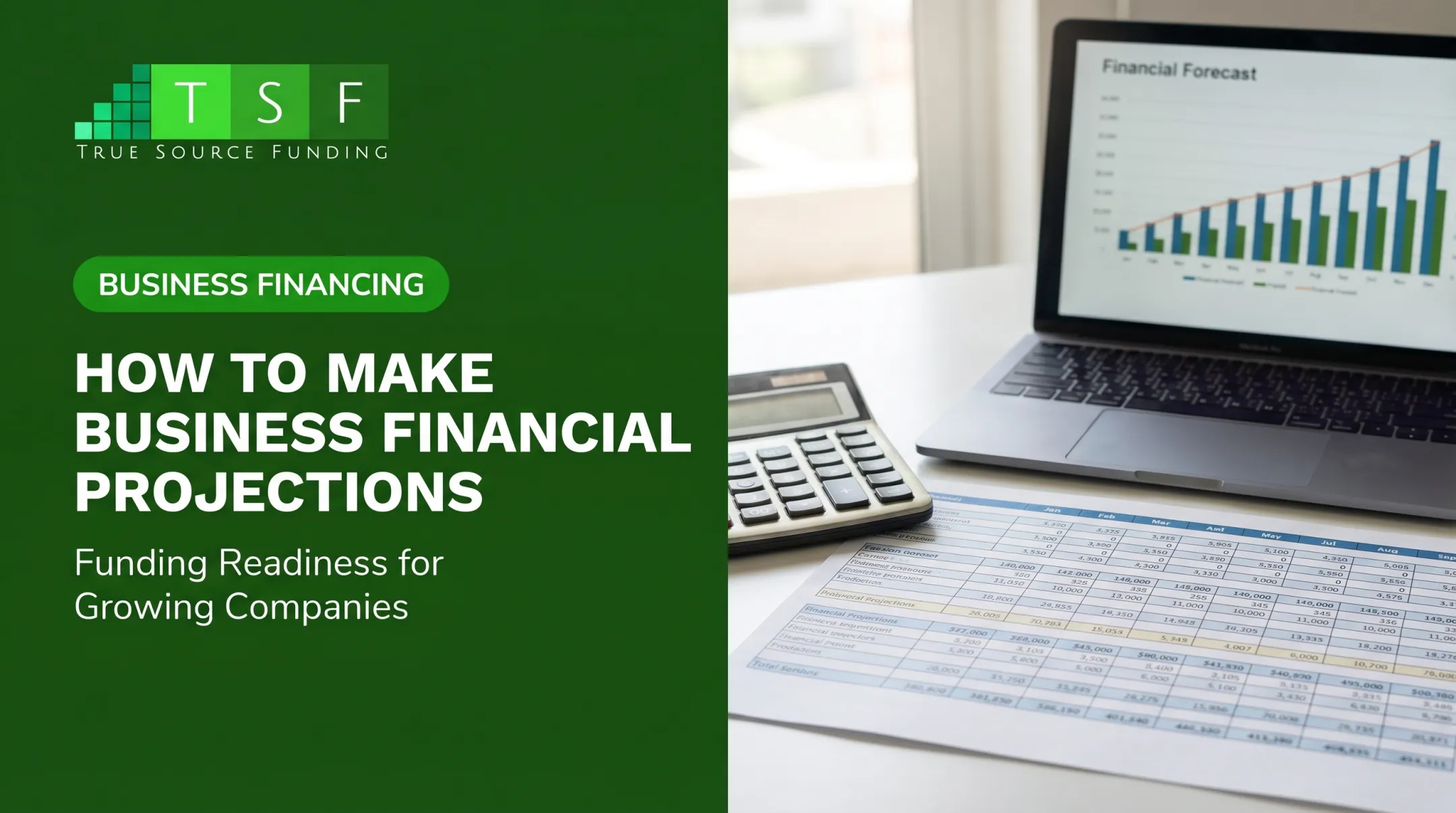
The SBA recommends a five-year outlook, with quarterly or monthly detail for year one, covering income statements, balance sheets, cash-flow statements, and capital budgets. Include history where you have it.
Then tie every major number to a driver: customers, pricing, sales capacity, conversion, retention, production volume, hiring, or payment timing. "Revenue grows 40%" is a claim. "Four reps each close six deals a quarter at $18,000" is a model.
Unit economics and capital efficiency
Pick the metrics that fit your model:
- Gross margin and contribution margin
- Customer acquisition cost (CAC), lifetime value (LTV), and CAC payback
- Recurring revenue
- Utilization or project-level returns
No universal LTV/CAC or margin target applies to every sector, so benchmark against your own industry. Show how the capital changes revenue, runway, working capital, or asset purchases. Funding is not a generic cash infusion.
Scenarios and sensitivity
Present base, upside, and downside cases. Identify which assumptions swing cash needs or milestone timing most. Then say what you would do if sales slip, costs rise, customers pay late, or funding is delayed.

Reconcile everything
The plan, deck, model, summary, and cap table must use the same definitions, periods, funding amount, and figures. Have an accountant or finance professional review shaky books and cash-flow timing before outreach.
If a metric can't be substantiated, don't give it a precise number. Federal antifraud rules also apply to exempt offerings, including false or misleading statements, oral or written.
Build a diligence package
Organize a data room that includes:
- Financial statements and model assumptions
- Contracts and pipeline evidence
- Ownership documents, IP, and licenses
- Market research and key resumes

Describe proprietary processes at a high level until confidentiality terms are in place. Many professional investors refuse pre-pitch NDAs, so don't make one a condition of a first meeting.
Tailor, Review, and Present the Plan
Adapt to the investor's stage
- Early-stage: founder-market fit, customer problem, product thesis, early validation, and what the next round tests or unlocks.
- Growth or private capital: repeatable revenue, retention, operating performance, management depth, cash needs, and expansion, acquisition, or project economics.
Use the plan with the deck and model
Treat the materials as three layers of one story:
- The deck creates interest
- The plan adds narrative depth
- The model proves the numbers
Also prepare a 60-second verbal pitch covering the business, problem, solution, timing, raise, and next milestone.
Run a final readiness review
Check that the plan is specific, readable, evidence-based, and honest about weaknesses. If you want help organizing financials, plans, pitch decks, or capital strategy, True Source Funding offers consulting and private-investment preparation for US businesses, with dedicated application support.
The firm reviews a company's finances, growth strategy, and funding objectives before introducing an opportunity to its investor network. Approval or investment is never guaranteed.
Treat the plan as a living document. Update it after new traction, changed assumptions, new funding, or investor feedback.
Frequently Asked Questions
How to write a business plan for investors?
Define the problem, solution, customer, market, business model, team, traction, financial outlook, funding request, use of funds, risks, and value-creation path. Support each with credible evidence.
How do you write a business summary for investors?
Summarize what the company does, who it serves, why now, what differentiates it, what traction exists, how much capital you need, and what that capital will accomplish.
What are the key elements of a business plan for investors?
Core elements include the executive summary, company and solution, market and competition, business model, go-to-market plan, team, operations, projections, funding request, milestones, risks, and supporting evidence.
What are the three C's of a good business plan?
No single "three C's" standard exists for business plans. A useful strategy framing is company, competitors, and customers. The five Cs of credit are a separate lender framework.
What are the 7 types of business plans?
One commonly cited vendor list is traditional, one-page, lean, growth, internal, five-year, and nonprofit. Classifications vary, and an investor plan often blends traditional, lean, and growth elements.